
Original article on How to Write Social Media Titles (That Make People Click) here on Neil Patel's blog
It's painful.
You write a high-quality article. Then, after carefully reviewing it, you publish it. You schedule updates for peak times on your social media.
You expect the update to receive hundreds of likes, shares, and retweets.
But his update only gets a few likes and tweets.
The tweet gets lost in the sea of 10,491 tweets sent every second.

And your Facebook post lost the battle against the 1,499 other posts that appear in their fans' feeds.
Grrrrr.
A relevant post isn't enough. Even writing a powerful title doesn't guarantee you success on social media.
So what's your best bet?
You need to combine your updates when writing titles for specific social media platforms and that adapt to each social media platform.

Your target audience spends their time on different social media platforms for different reasons, and you need to cater to them according to the requirements of each platform. Only then will your content distribution efforts bear fruit.
In other words, you might need to post self-explanatory images on Instagram or request a retweet on Twitter.
Understanding your audience's preferences across different social media platforms can be a difficult task.
I know how you feel.
But you don't need to worry.
In this article, I will share strategies for writing social media titles, specific to each platform – Facebook, Twitter, Google+, and LinkedIn.
But first, let's take a look at why you need to write captivating titles for different social media platforms.
Why is the title the most important element for increasing your shareability?
Adapting your content to meet the demands of your audience takes work.
Writing and testing different titles for each social media platform takes even more time.
Here are 5 reasons that prove the key role titles play on social media. I hope you feel motivated to put in the effort after reading about them.
1. Internet users scan the headlines. - Our average attention span It is smaller than that of a goldfish.

Engaging content is no guarantee of more clicks on your social media updates.
Whether it's a Google search result or a post on their Facebook timeline, people determine in a fraction of a second whether your content is worth their time.
Forget about reading or scanning your text. Information overload has led readers to scan even the headlines.
- One 2010 study conducted by Outsell It was discovered that 44% of Google news visitors scan the headlines.
- The Nielsen group discovered that people typically read the first 11 characters of titles.
- This article from KISSmetrics mentions that people only look at the first 3 and last 3 words of titles. The findings are supported by usability research.
2. Titles are worth 90% of advertising investment. The title is possibly your only interaction with the audience.
David Ogilvy He believes that 1/5 of the people who read his title also read the body of his text.

Therefore, a tempting title will not only increase your CTR. He will also interact with your user from a positive point of view.
If your content delivers on the promises you made in the title and clearly conveys your intention, you've made a good first impression.
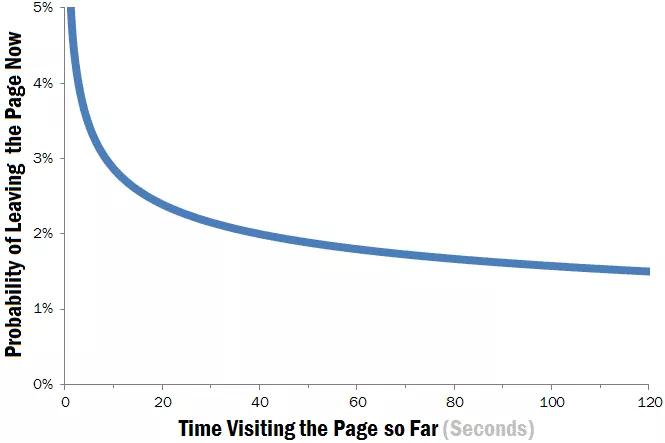
You also dramatically increase the likelihood of the user staying longer on your site (follows a negative Weibull distribution).
3. A great title can get your article shared hundreds of times – In the heap of 2 million blog posts Of the posts published every day, how many do you think get more than 100 shares?
A measly 11%.
According to research by CoSchedule and Buffer, out of 1 million titles, 89% of the created content doesn't even reach that mark of 100 shares.
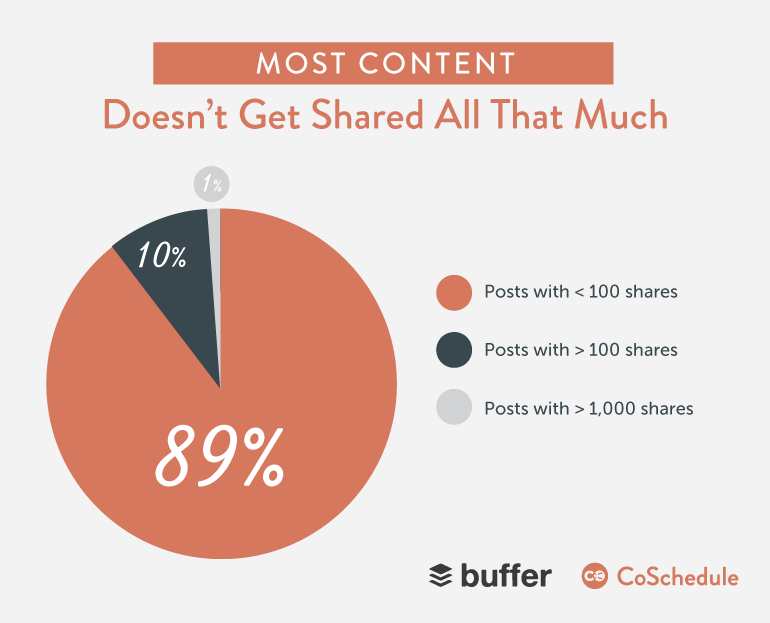
But you can still be part of that 1% – Get thousands of shares for every article you write.
As?
Writing a captivating headline.
One automated content curation It's more common than you think.
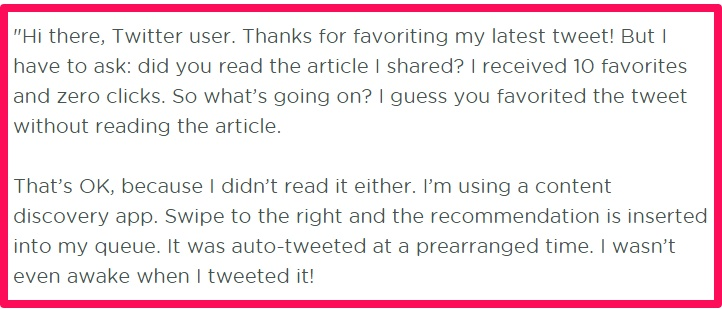
Think about the last 5 tweets from articles that you clicked on as favorites.
Did you read each article before pressing the favorite button (now called the like button)?
Probably not.
An exceptional title can get your article shared on social media even before it's been read.
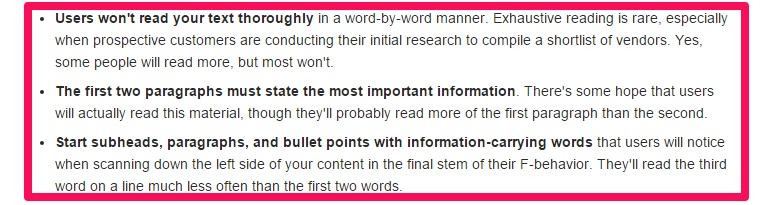
4. Internet users read (approximately) in a standard in F format – Eye-tracking studies have revealed that, on the internet, users typically read in two horizontal movements followed by a slow and systematic vertical scan.
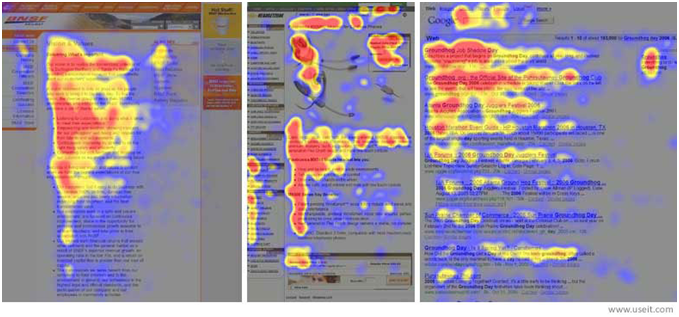
Easily scannable writing with titles and subtitles packed with important information is appreciated by social media users.
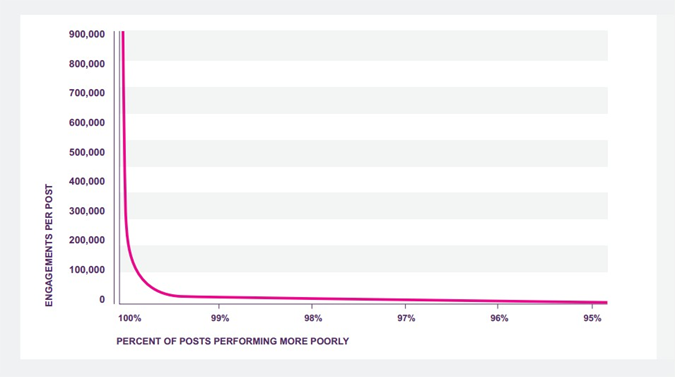
5,99% of organic social media posts receive no interactions – Remember when I told you that your update competes with hundreds of others sent every minute across various social media platforms?
A Social Flow (a social media optimization platform), in its study of 1.6 million posts on Twitter, Facebook, and Google+, found that 99% of them receive little or no interaction.
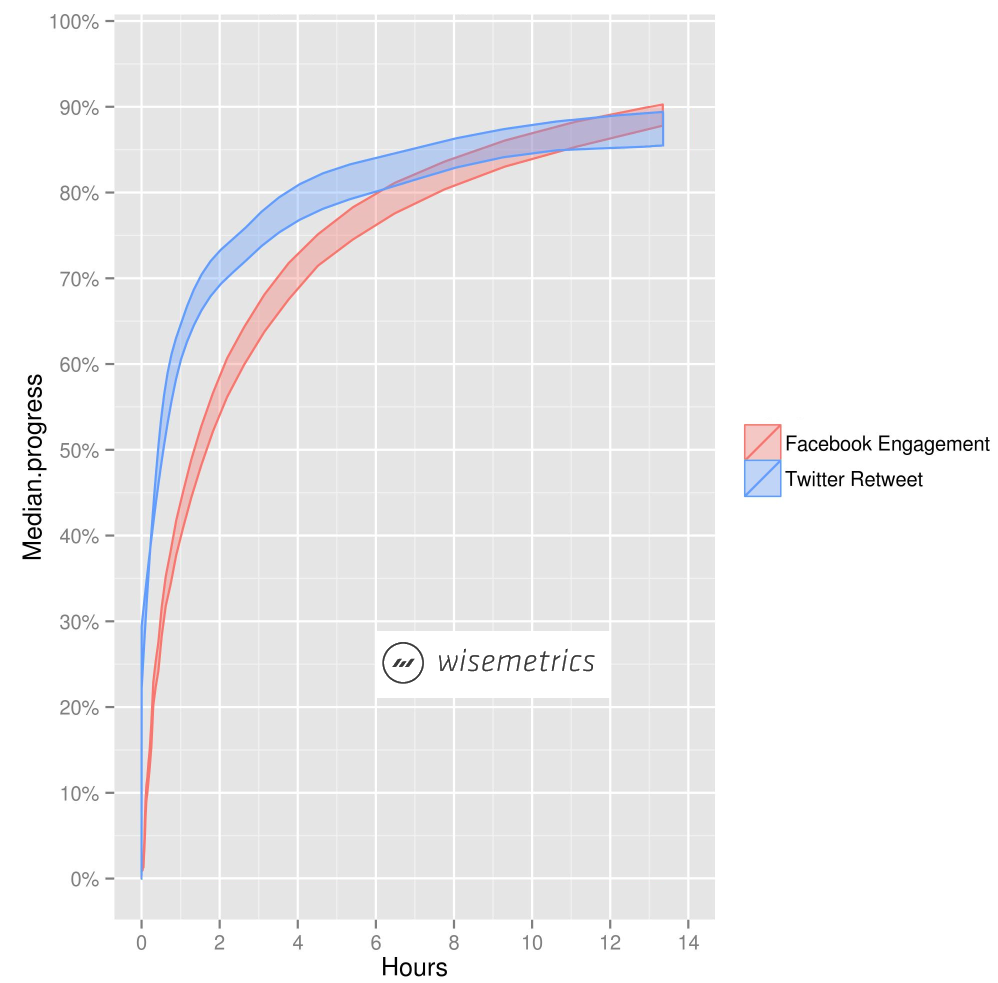
The updates disappear from your feed within minutes.
Wisemetrics found that the average interaction time for Twitter is 24 minutes and 90 minutes for Facebook.
Sending the same update more than once is a good strategy to reach more fans and target different regions.
But without a catchy title, your update won't grab the attention of users amidst the vast social chaos that unfolds every minute.
It turns out that some publishers have mastered the art of viral content creation. They manage to obtain millions of views.Mostly on social media.
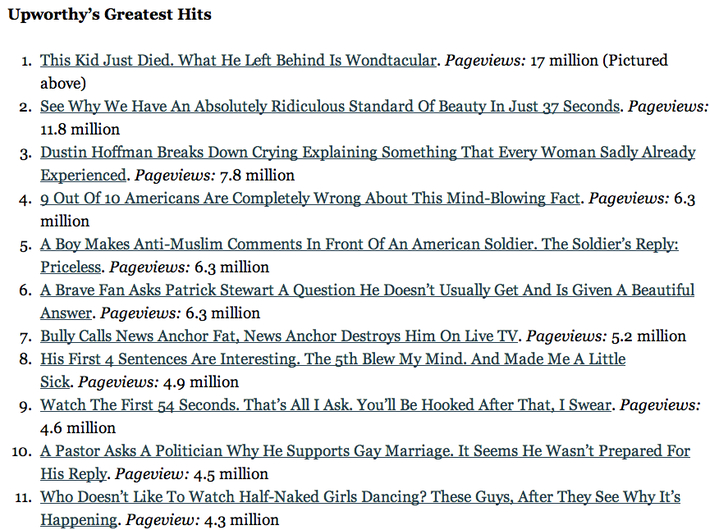
Therefore, our best chance is to study viral websites like BuzzFeed, ViralNova, and UpWorthy.
Posts on these sites typically receive a great deal of interaction (thousands of likes, hundreds of shares, and comments).
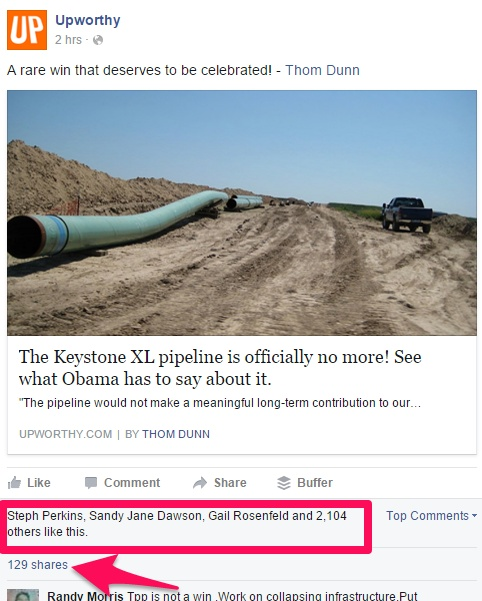
I'll delve deeper into strategies for writing social media headlines later. First, let's look at this research on viral websites and figure out what works for them.

Key points from the most shared viral headlines on BuzzFeed and other viral websites.
What do you think is the difference between 1 million and 17 million video views?
It's simply Improve your title..
No, I'm not kidding.
A UpWorthy, In fact, it has already achieved this feat.
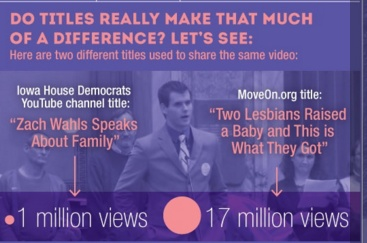
If you can understand your readers' preferences, you can make smart decisions. The best way to understand your user's behavior is to test your titles, collect data, and refine them.
For example:
- BuzzFeed discovered that color images convey information faster than black and white images and therefore perform better.
- Images where you can see the entire body perform worse compared to those where you can only see the upper part of the body.
UpWorthy writes 25 titles For each of her articles, she then performs an A/B test on the two main options to find out which one performs better.

Let's delve deeper into the findings of two studies about websites that write viral headlines to uncover their secrets.
1. The most common words in 3,016 titles from 24 websites
The guys from Buffer and Ripenn analyzed the top headlines from BuzzFeed, ViralNova, UpWorthy, Wimp, and 20 other websites.
And they discovered that there was a pattern.
In addition to the use of articles, prepositions, and pronouns, viral headlines also extensively use some unusual words. Here's a game-changer.
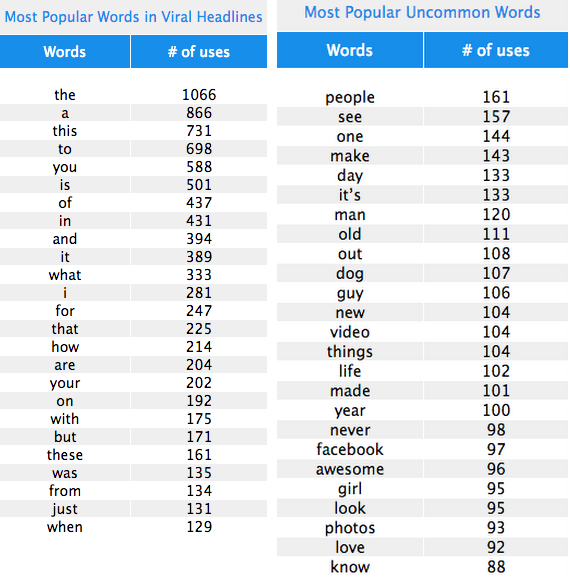
I always emphasize that you should speak to your audience in a... conversational tone.
It's no wonder that the words "you" and "your" hold positions in the top 20.
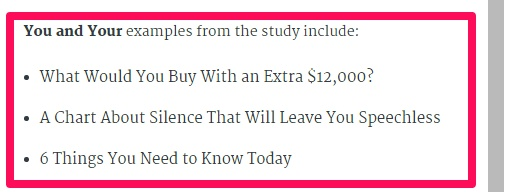
Let's review some other words.
Lists – 19% of the titles had a number. Titles supported by lists and data are extremely visually appealing, probably because of their easily perceived practical value.
That - This word demonstrates specificity about the subject and makes the user want to click on the article. 'This is' also appears at the top of the list of most popular two-word phrases.
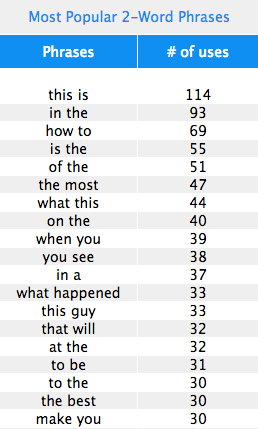
For example: "This short film shows how terrible life is for LGBT people in Russia."“
What, which, when and why – These words save many lives when it comes to creative exercises like composing music. In the case of titles with questions, the main reason for their effectiveness is probably that they spark our curiosity.
For example:
- “Which character from 'It's Always Sunny in Philadelphia' are you?‘
- “"16 Legitimate Reasons Why Valentine's Day Is the Worst"”
Videos Visuals continue to be extensively used on the internet. A video can increase your engagement and conversions.
It's natural that the word "video" (grouped or not) receives more clicks and shares.
For example: "I saw more in 3 minutes than in 3 years of my life. This guy's video is epic.".
How – Education and instruction. That is the promise of a title containing the word "how".
Sites like WikiHow have built a comprehensive content business using these titles and developing engaging content. The word "how" is also number 3 on the list of most popular two-word phrases.
For example: "How to create chocolate from scratch".
For your reference, here are the most popular 3-word phrases in viral headlines.
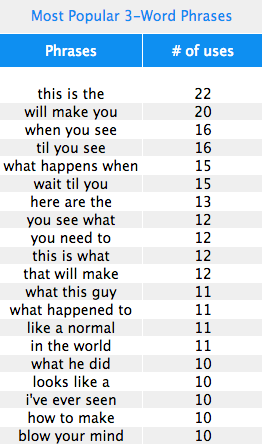
2. The secret to how BuzzFeed gets its readers to click on its articles…
We like to think of ourselves as rational beings. But many of our decisions are made emotionally and within a few seconds.
Daniel Kahneman, in his book "Thinking, Fast and Slow," mentions our two modes of thinking.
- System 1 is subconscious, emotional, instinctive, and fast. Most of our time is spent thinking in this system.
- System 2 is time-consuming, deliberative, conscious, committed, and logical. It is used only when there is complex information that needs to be processed and resolved.
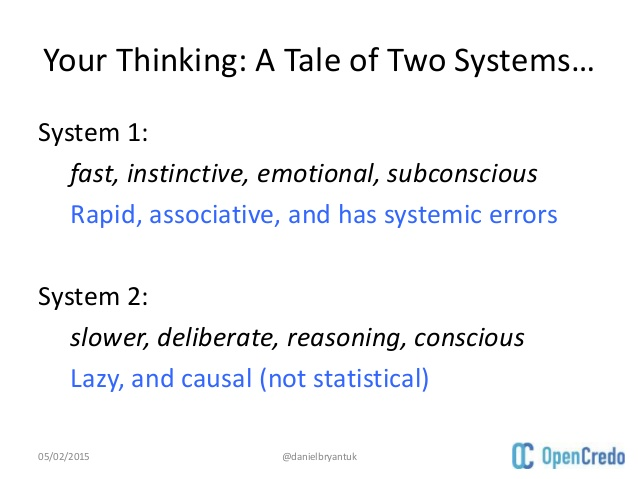
According to research by Sonya Song, conducted at the Nieman Lab, When we are browsing social media, we enter an unconscious state of attention (system 1).
We are in a relaxed mental state, quickly scrolling through streams of photos. Therefore, large, colorful photos will attract your attention.
All of this is great….
But you might be wondering how BuzzFeed is related to this.
BuzzFeed has mastered the art of quick and long thinking.
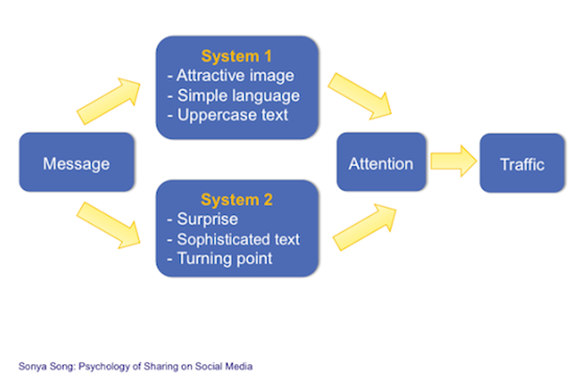
Most of their updates use titles with capital letters, attractive photos, and are written in simple language.
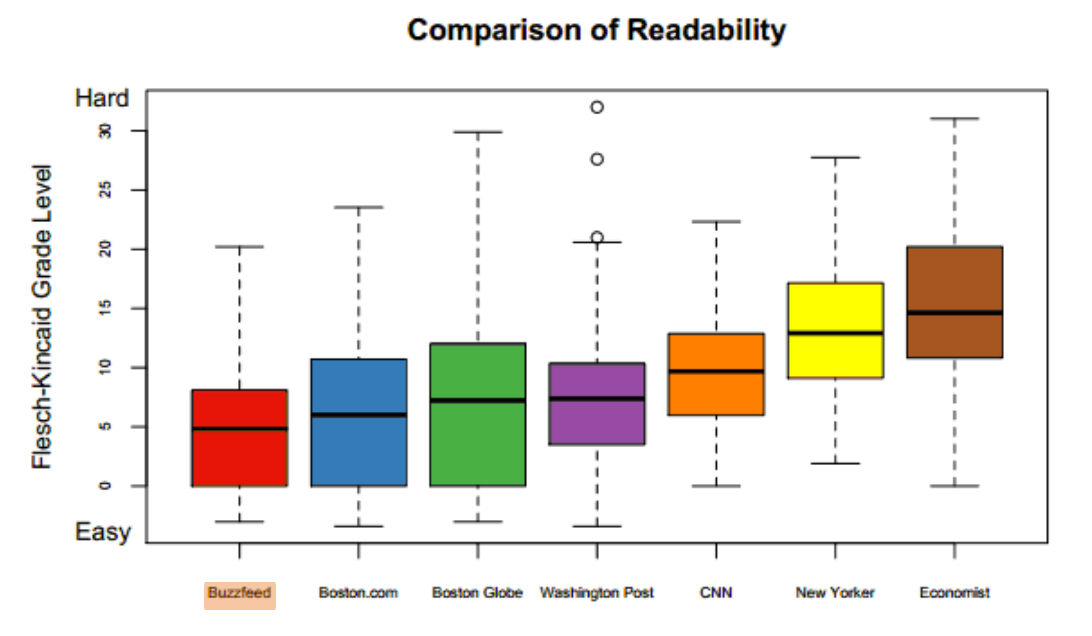
Such entertainment articles attract the attention of a social media user. It's not surprising that BuzzFeed has a high level of engagement on its page.
On the other hand, BuzzFeed has also invested heavily in data-driven investigative journalism, earning the support of Pulitzer Prize winner Chris Hamby.
The format for telling these investigative stories is heavy visualization. Therefore, in a way, they are producing a intelligent content which interacts with its audience in a slow, thought-provoking way, but is specifically tailored for its audience to think quickly.
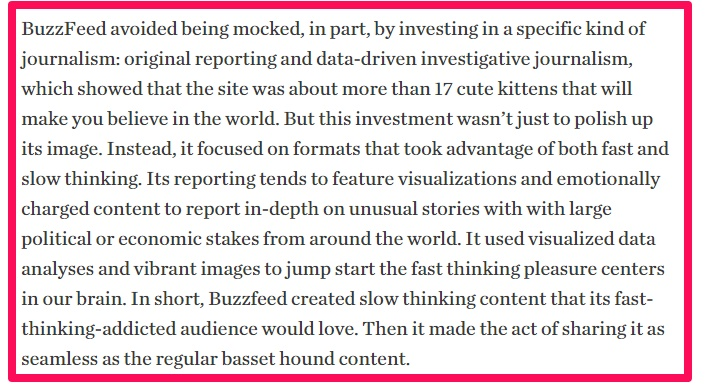
Since complex stories engage the audience in a slow-paced way, they become actively entertained by the content – commenting and sharing their feedback on the posts.
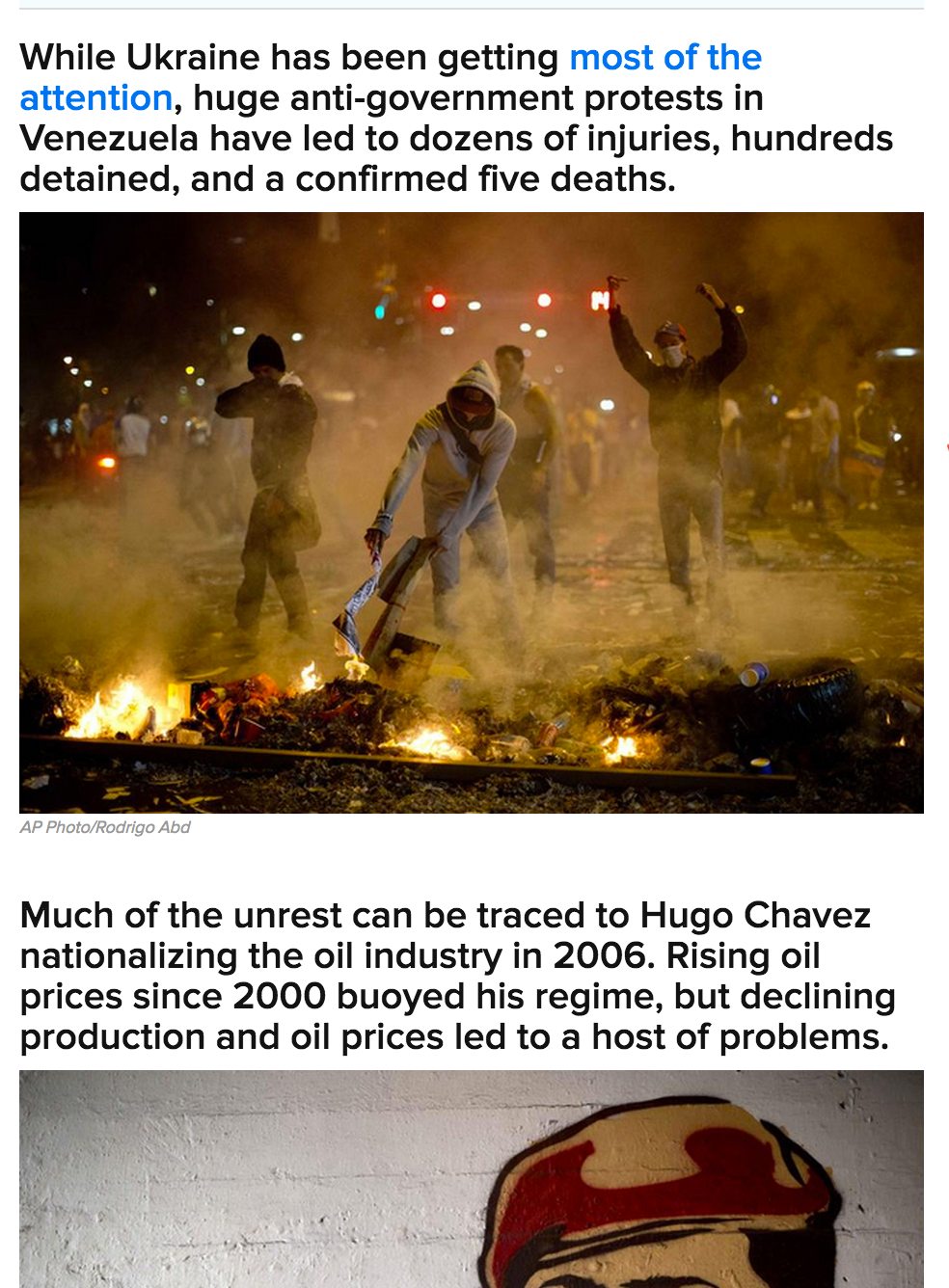
And the more time a user spends on a website, the greater the likelihood of them returning.

How to write compelling social media updates: data-driven strategies
CoSchedule conducted an analysis of the relationship between a title and its likelihood of being shared on social media.
Here are the 3 main findings:
1. Titles that receive more than 1,000 shares mostly belong to these 3 categories – food, lifestyle, and home.
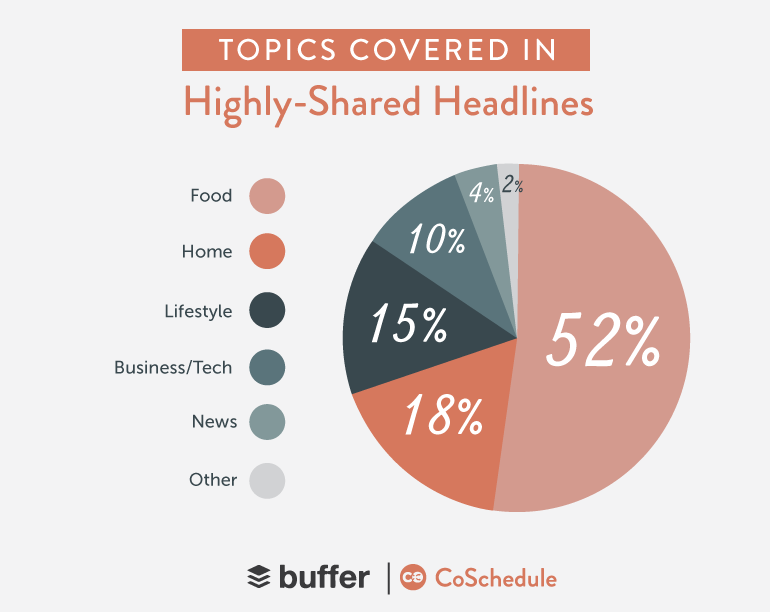
Therefore, if you're an app or business blogger, you don't need to worry about receiving less traffic and shares than those related to lifestyle or other consumer industries.
You are part of only 14% of the most viral content in the world.
2. Titles that are emotionally charged receive a higher number of shares. You can find out your title's Emotional Value Score (EMV) using... this free tool.
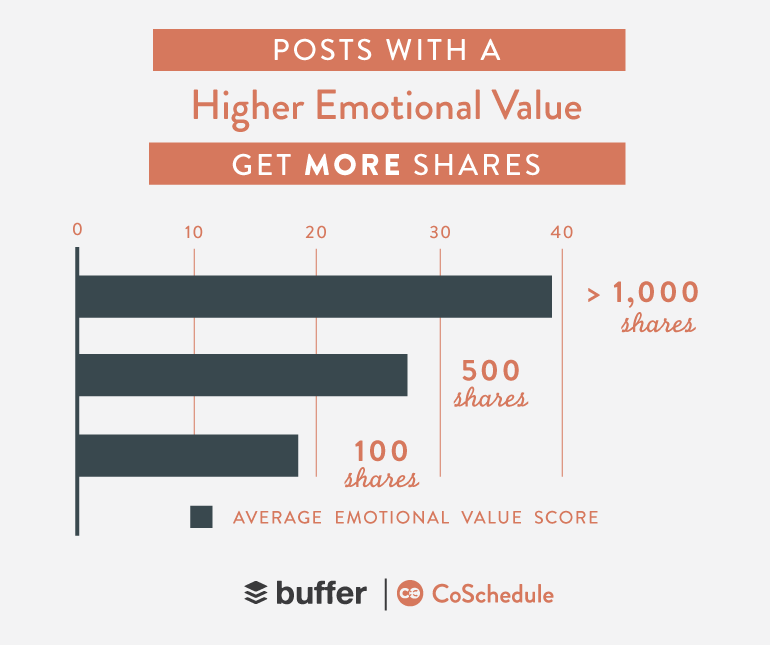
30-40 is a healthy EMV score for better sharing. Adjust your title and load it with emotional words to increase the chance of your content going viral or at least achieving more interactions.
3. The demographics of your audience, their motivations, and their overall personality across different social media platforms influence how much they share.
Don't make the mistake of using a single approach for all social media platforms.
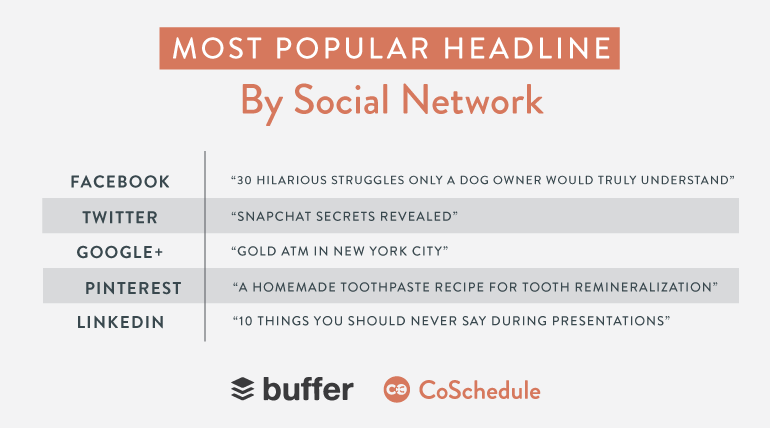
What is considered viral has different meanings on Facebook, Twitter, LinkedIn, and other social media platforms.
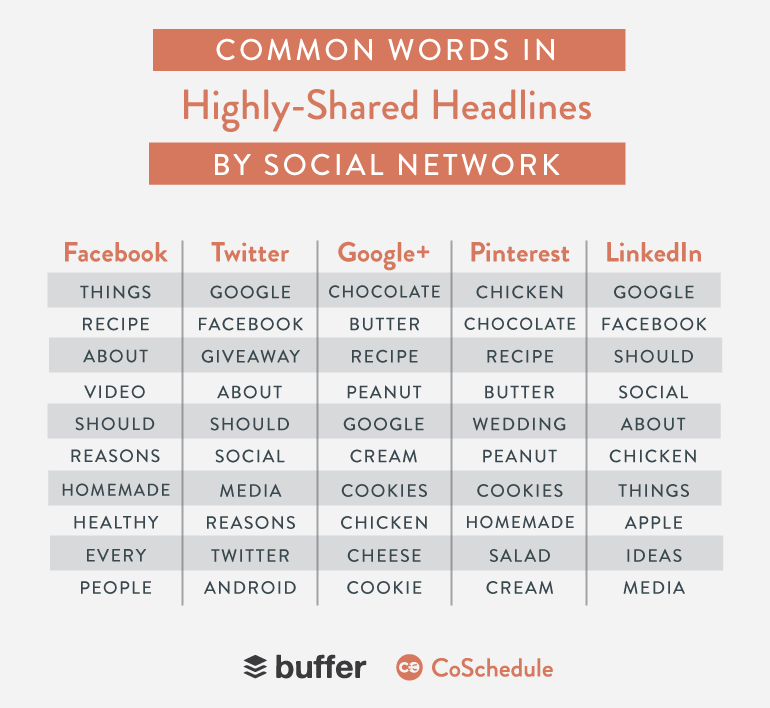
The most popular titles are different for each social network.
And the most common words in viral headlines are also different for each social network.
By now, you should be convinced that successful blogs rely heavily on their article titles.
So, would you be interested in strategies that increase shares across different social media platforms?
I think so.
Let's start with a quick overview of the 4 U's preached by American Writers and Artists Inc. to write titles.
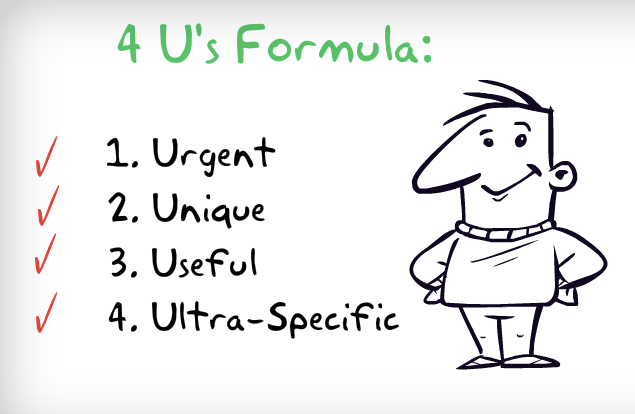
1. Urgency People should feel that they will miss out on valuable information if they give up after reading the title of your article.
If they don't feel that urgency, there are tons of other articles waiting to grab their attention.
2. Usefulness – “"What does this have to do with me?" That's the question consumers ask themselves before spending their time on any activity.
In the title, you should try to convey the practical applications of your article to the user.
3. Ultra-Specificity – You can use data and statistics to prove the truth, as well as to demonstrate your authority.
Furthermore, if you clearly state some of the benefits your article provides, your target audience will be more likely to read it.
4. Uniqueness – Show your personality. This is the easiest strategy to immediately grab your readers' attention. Embrace your quirkiness or funny side.
I hope you now feel more confident writing titles for social media.
But the elements for a compelling title go beyond the words used on all social media platforms.
Facebook gives you the option to share your update in various ways – links, photos, polls, videos, and more. You have tons of options. flexible formats.
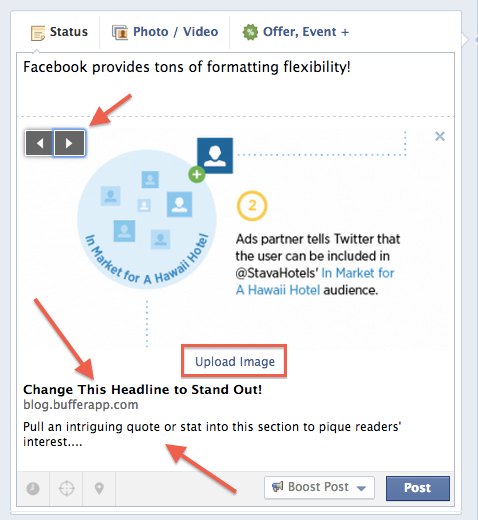
Using the natural capabilities of social media platforms is essential to increasing the number of shares of your posts.
Let's explore the unique facets of 4 social platforms (Twitter, Facebook, LinkedIn, and Google+) one by one.
The microblogging network demands an unconventional approach. You have to keep the 140-character limit in mind, plus space for @mentions and retweets.
O ideal number of characters To achieve greater interaction (reply rate and retweet rate), the ideal length is 71 to 100 characters.
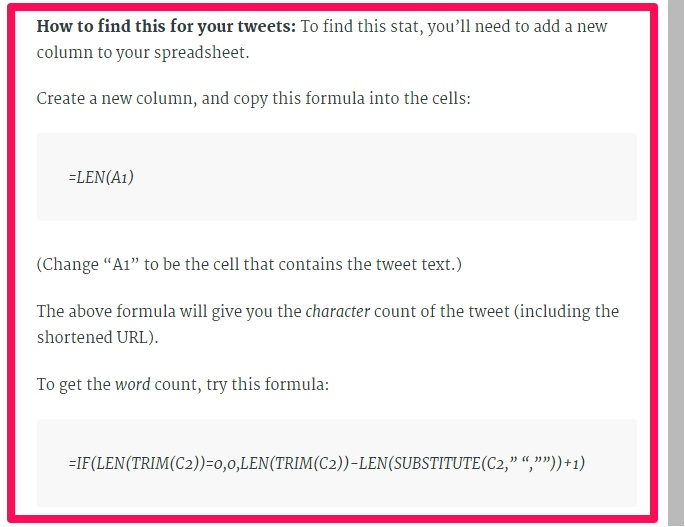
Buffer found its sweet spot between 80 and 120 characters. Here's a graph of its engagement for 150 tweets.

You can use this formula for plotting your interaction graph in a spreadsheet.
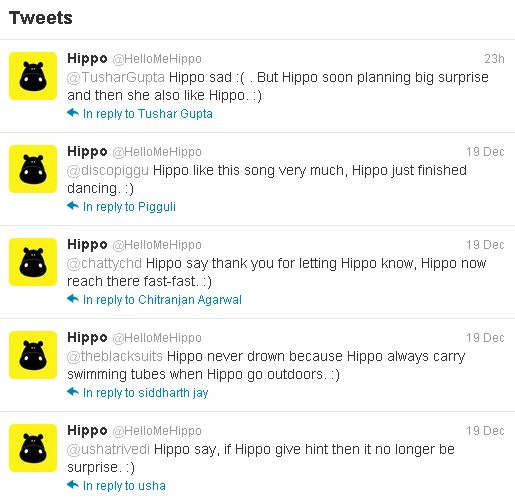
The character limit doesn't mean you can sacrifice grammar and punctuation while tweeting.
Unless that's part of your personality, like... Hippo.
Dan Zarrella suggests using the words 'you', 'please retweet', and 'download' to increase your chances of getting retweets and improving your CTR.
Here is a list of the 20 most retweeted words.

Twitter itself defends that the words 'download' and 'retweet' are the most effective calls to action.
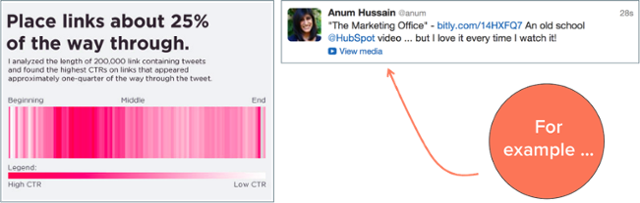
For a better CTR, your link should be placed within approximately 25% of the size of your tweet.
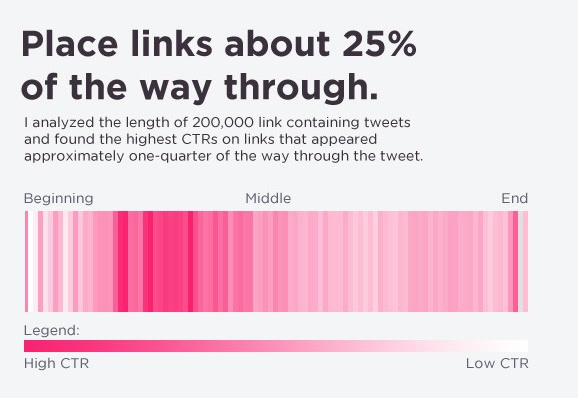
Here is an example of Anum which shows you how to properly place your links in a tweet.
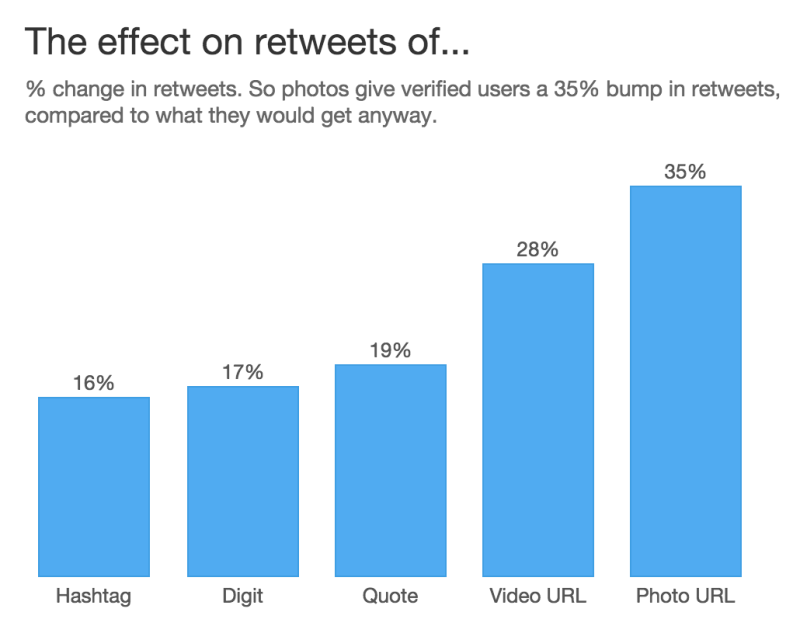
Photos will give an increase of 35% in number of retweets For verified Twitter users. Videos also follow this rule very closely.
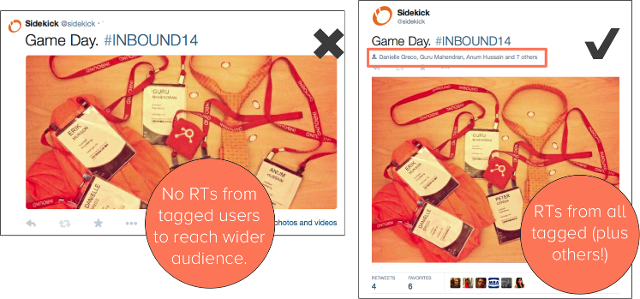
 You can tag up to 10 people in a photo on Twitter and increase your chances of getting retweets.
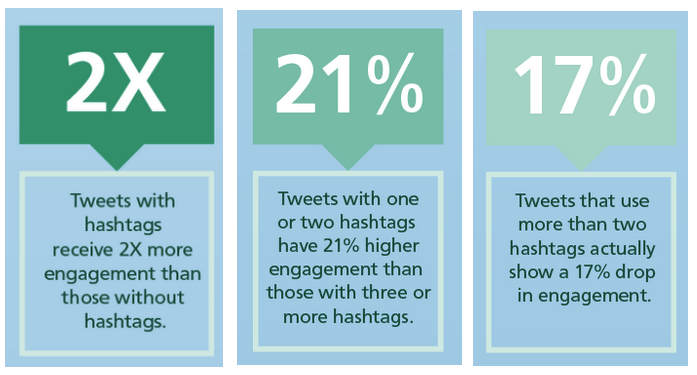
The ideal size for a hashtag is 6 characters. However, use them sparingly, because tweets with more than two hashtags present a risk of being overlooked. drop of 17% in the interaction.
A good tweet will attract attention and pique the curiosity of your audience. It will also create a sense of urgency to drive clicks on the link to your article.
Examples:
- No, you can't become a millionaire. 7 reasons why. [link to article]
- Want to know the characteristics of a high-converting landing page? Download our free guide: [link to article]
Bonus tip: It's frustrating to write a post that you later discover has no demand.
How about testing out your article ideas before you start working on them?
If you have a considerable number of followers on Twitter, you can validate the idea of your post (before writing it) using the Andrew Chen's formula.
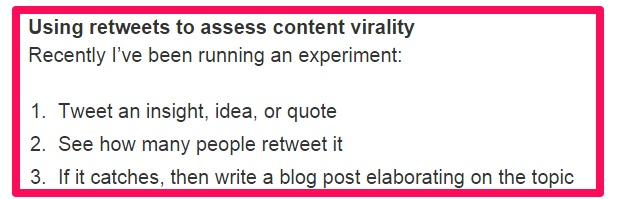
Facebook was a prime location for marketers to interact with their target audience, before... decline in organic reach.
But you can still drive a considerable amount of traffic from this platform by sharing engaging updates using the strategies below.
Recent studies show that interaction via links It currently triumphs over photos and other types of updates on Facebook.
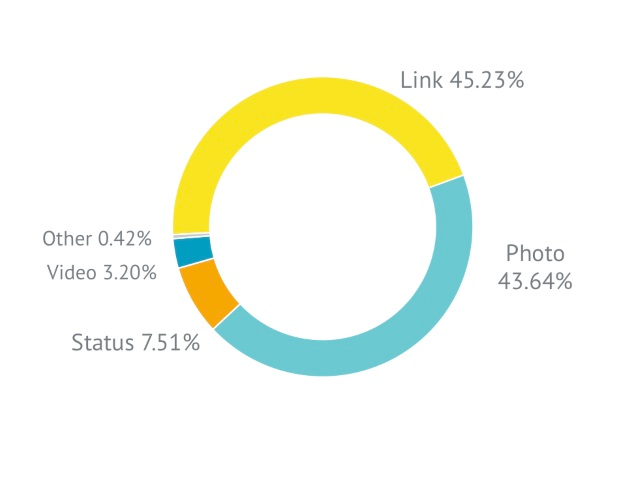 Maintain a professional appearance by removing the URLs from the links in your post.

You can try using links. But maintain a good mix of content and explore your Facebook Insights data to discover what is most interesting to your audience.
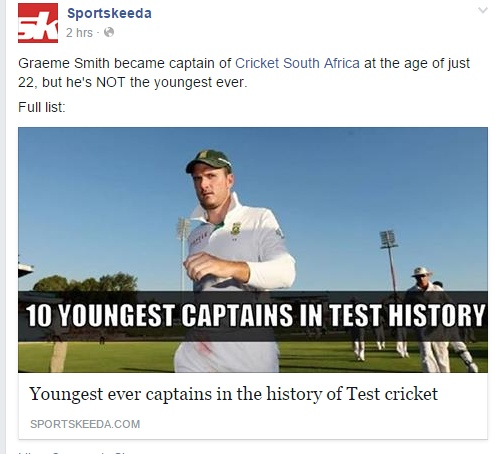
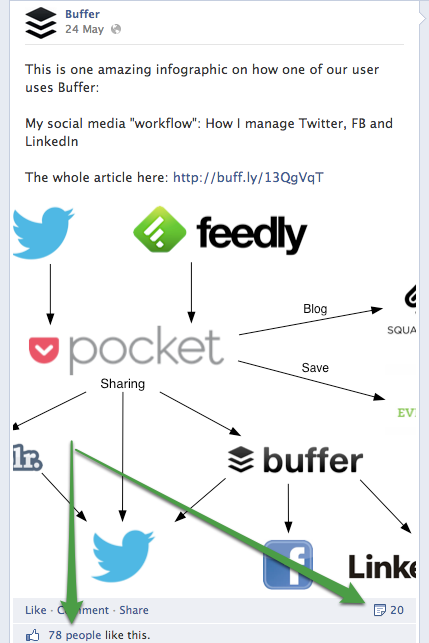
Posting photos on Facebook works well, provided they are self-explanatory.
This could mean writing captions on photos, like Sportskeeda.
Or simply an image with a clear message, like this one posted by Buffer.
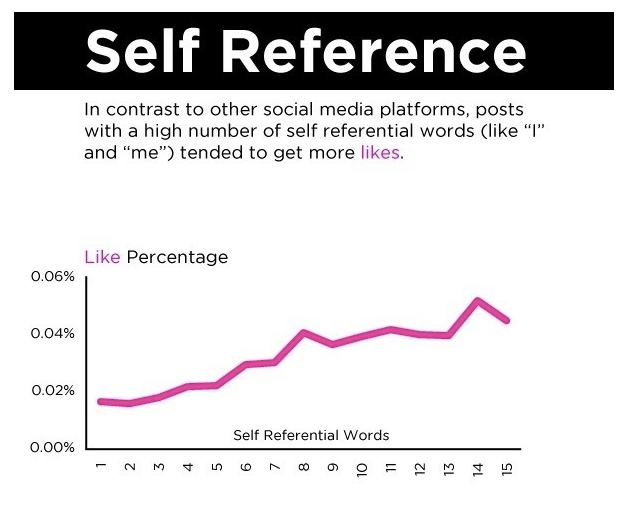
Facebook is a conversational platform and, according to Dan Zarrella, Self-reference, using words like 'I' and 'me' will get you more likes on this social network.
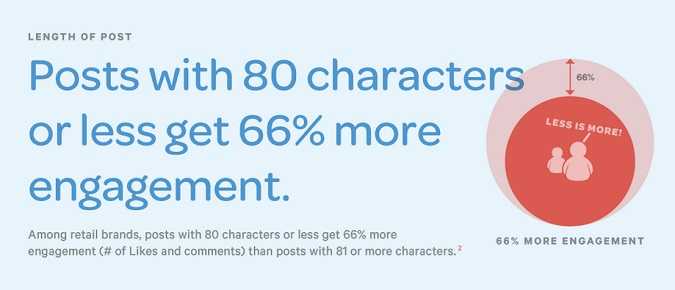
According to KISSmetrics, Shorter posts (maximum 80 characters) achieve 66% more interaction. Therefore, limit yourself to using only a few descriptive lines when posting on Facebook.
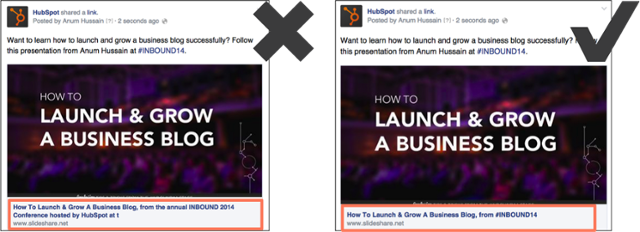
Also be mindful of the length of your titles. They get stuck in the feed after 100 characters.
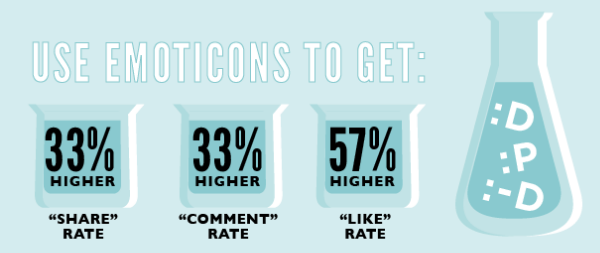
Don't underestimate emoticons. Posts with emoticons They have 57% more likes, 33% more comments, and 33% more likes than posts without emoticons.
Andrew Chen's article, which tests the formula with a citation from a prospective article, can also be applied to Facebook.
Here's an example of Joel from Buffer gauging interest in the topic of 'transparency' using this formula.
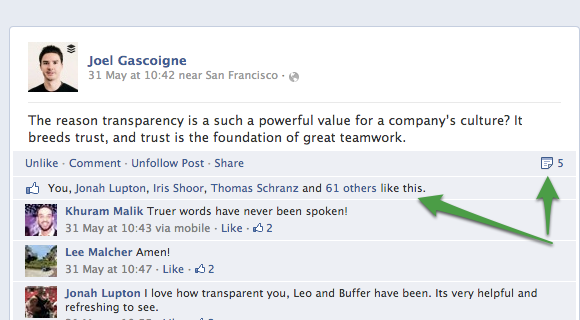
The interaction validated that the article would be of interest to Buffer's target audience.
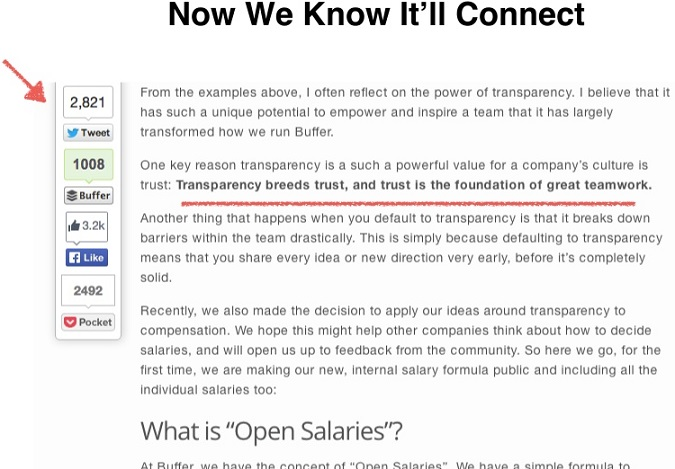
When they published the article, it received good traction on social media.
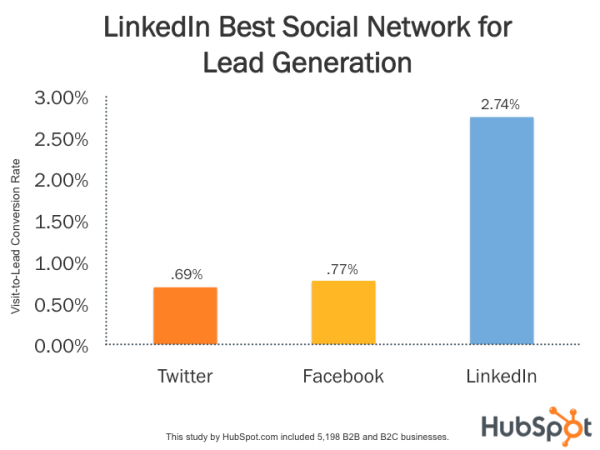
LinkedIn is a professional network that has a very low capacity (or apparent audience desire) for photos of cute puppies. You should focus on instructive, educational, and industry-related content on LinkedIn.
It is the most effective social network for lead generation.
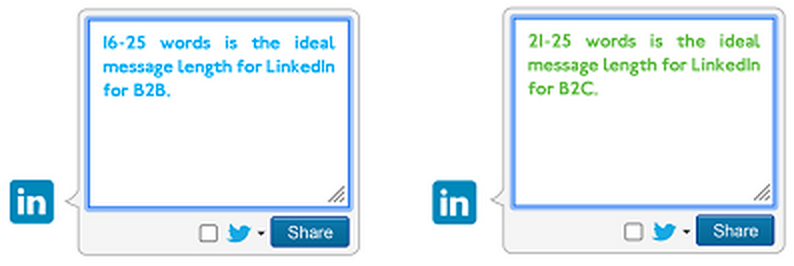
Sharing your opinions on a topic in 40-50 words with a link to your audience performs well on this platform.
The ideal length for a LinkedIn post, according to a study conducted across 200 companies, was 25 characters.
The links get 200% more interaction in a post on LinkedIn.

But the link title should not exceed 70 characters.
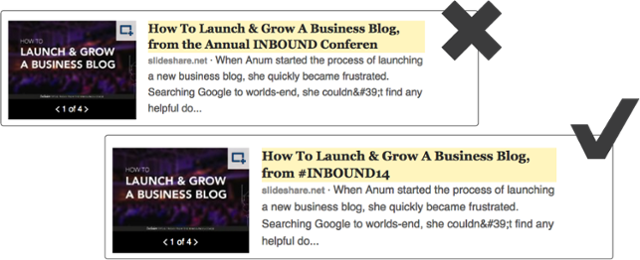
And the link description should not exceed 250 characters.

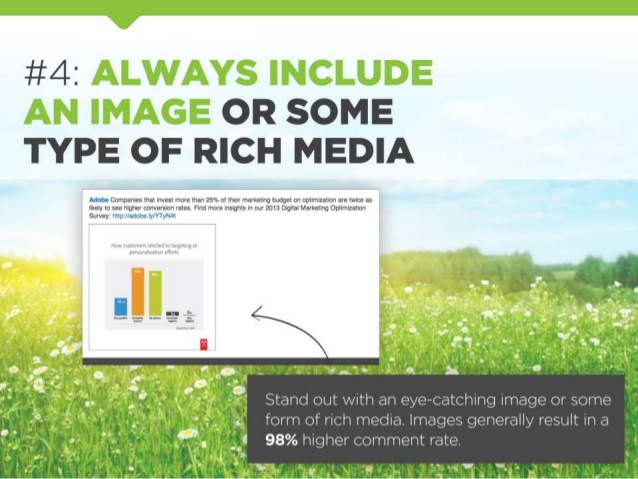
Visual resources receive better interaction on this platform. Images achieve a 98% increase in comment rate. And if you link to a YouTube video, it can result in a 75% increase in the share rate.
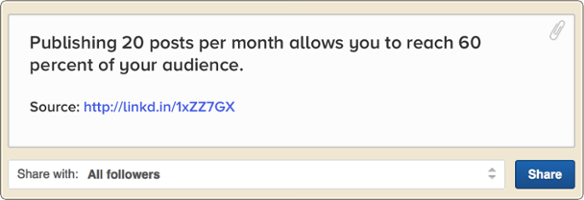
Pay attention to the frequency. 20 updates per month will get you 60% of exclusive profiles targeted to you. That's approximately one update every weekday.
Google+
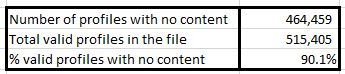
Google's social network was doomed to die. The numbers They support this story – less than 1% of Google's 2.2 billion users are actively using Google+.
You can argue that Google+ doesn't belong on the side of premium league players, like Facebook does.
But the niche communities They can and still thrive on this platform.
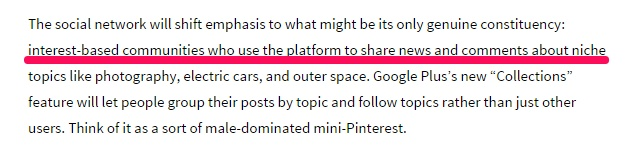
People like Dustin W. Stout They still receive high-quality interaction from this platform.
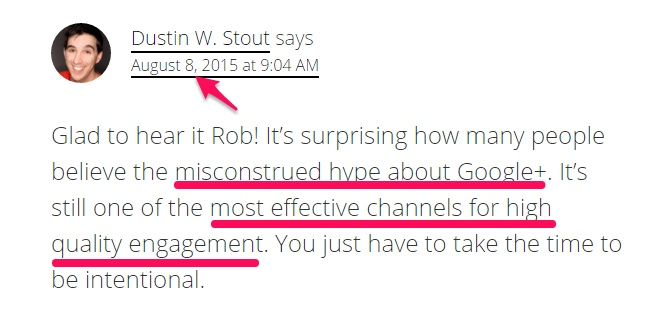
If you're getting considerable interaction and traffic from Google+, here are some tips to improve your posts.
Dustin W. lists the 7 elements for a Perfect Google+ post.
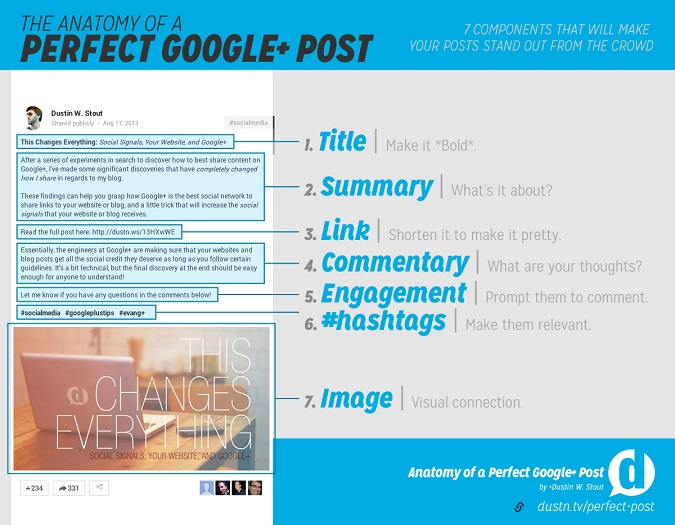
Let's separate them.
According to Damian, from CopyBlogger, The bold title of your update must be a maximum of 60 characters.
Otherwise, it jumps to the next line.
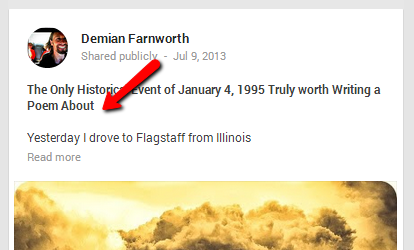
The titles are also shown in Google search results.
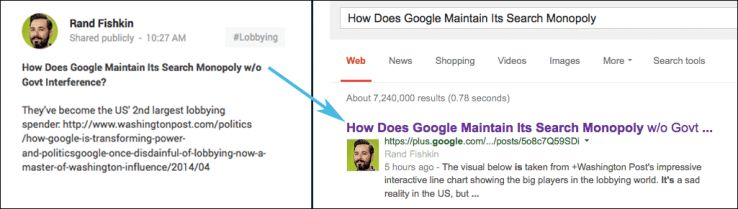
Therefore, take some time to write a short and interesting title that will attract people's attention.
Write a perceptive summary for your post. Don't consider this a teaser.
You can explain why the post is important. Including your opinion in this section of the content is also a good idea.
You can use these formatting options while writing the post.
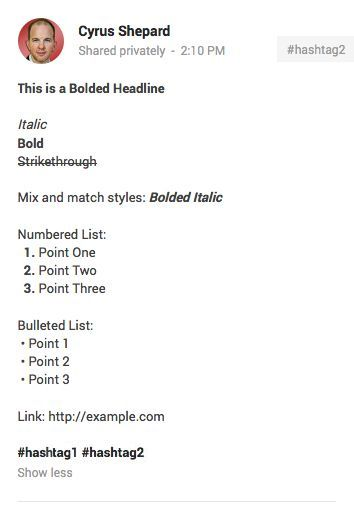
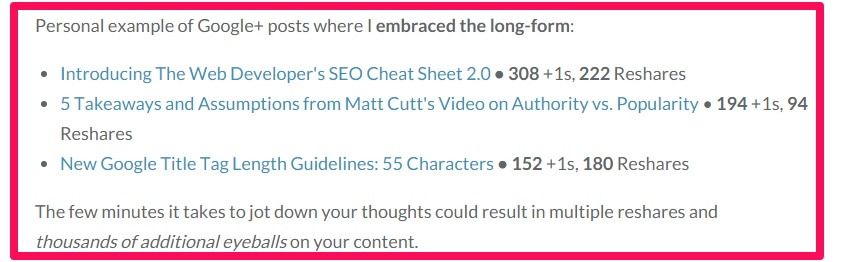
Cyrus Shepard encourages you to write longer posts. He has managed to get considerable interaction on his longer posts.
Make sure the first sentence of your update (after the bold title) is compelling enough to make your post be read.
Otherwise, people won't click the "Read more" link.
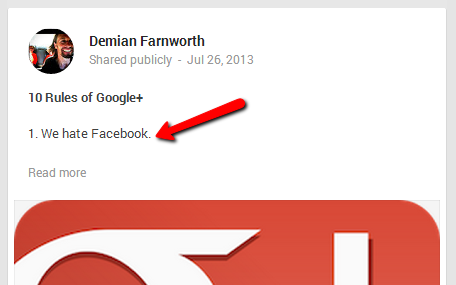
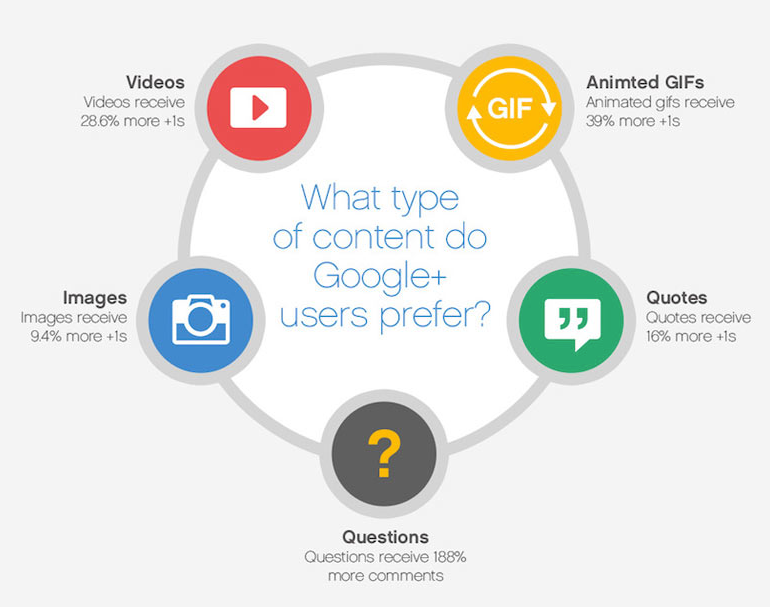
Google+ users They like it a lot. Questions, quotes, and visual content (animated GIFs, videos, and images).
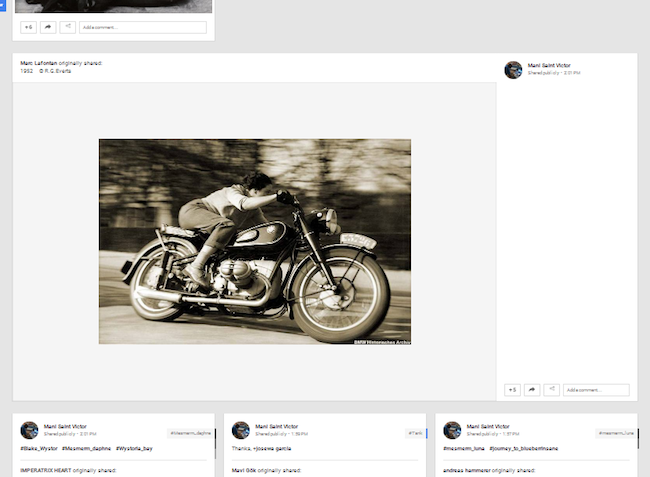
When you post a link, Google+ automatically grabs an image from your post, and high-quality images are supported on that platform.
Therefore, I recommend that you upload visually appealing images separately in your updates. They can even fill the entire screen.
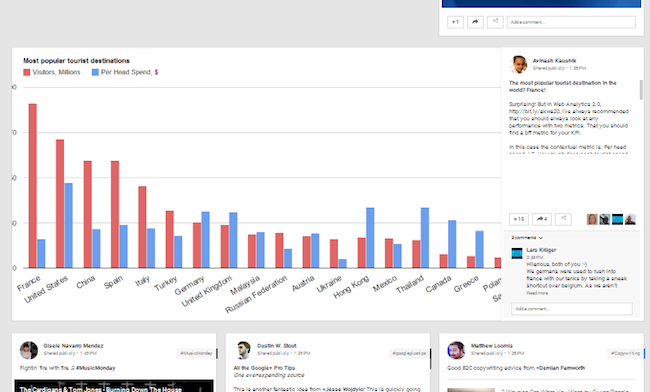
Additionally, you can upload screenshots and graphics. They can also take on significant value in your post.
Horizontal photos are more likely to result in your post having full traffic.

If you mention someone anywhere in your content, you can tag them using the '+' symbol. It's a good strategy for connecting with people.
Google+ automatically chooses relevant hashtags for your update, based on its content.
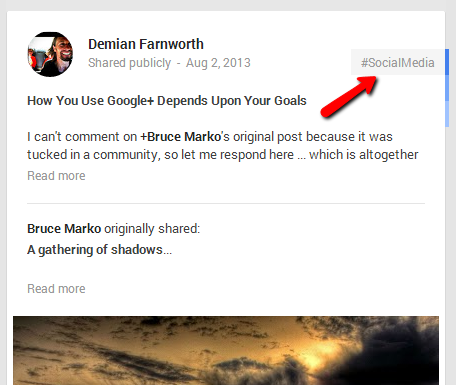
You can even allow the Google+ assign some specific and relevant tags for your post,
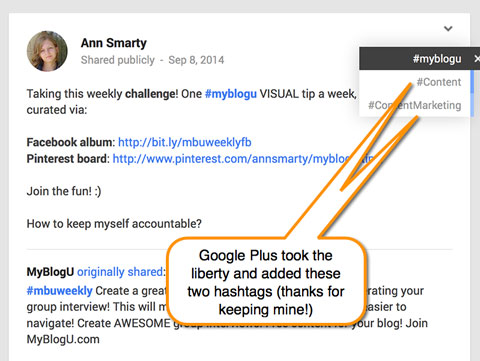
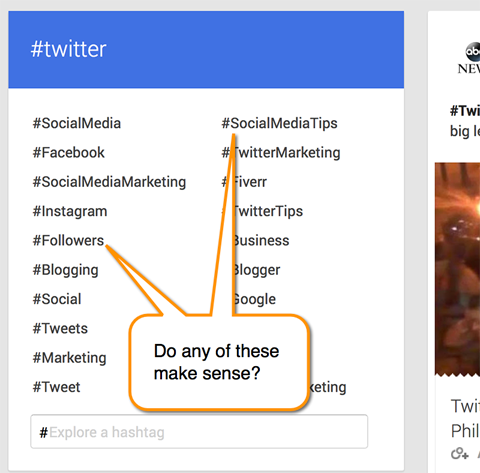
Or you can also Explore Google+ to choose those that will increase the exposure of your post.
How much time should you spend writing social media headlines?
Many bloggers argue that you should spend an equal amount of time crafting a clever title after writing your text.
Do you think this is necessary?
We've already seen the emphasis that viral sites like UpWorthy and BuzzFeed place on writing and testing their headlines.
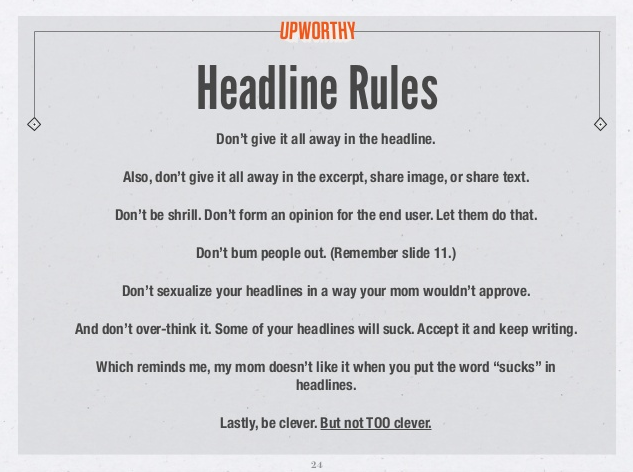
Therefore, if you're not confident about your headlines, I suggest you take on the challenge of writing 25 UpWorthy headlines.
Initially, it takes about an hour to write so many headlines. But very soon, you'll become a ninja headline writer, creating multiple compelling headlines for your posts within 5 minutes.
Caitlin from Blinkist (along with a teammate) accepted the 25-title challenge for 4 articles. They then tested the titles on Twitter. Here are the results for one test.
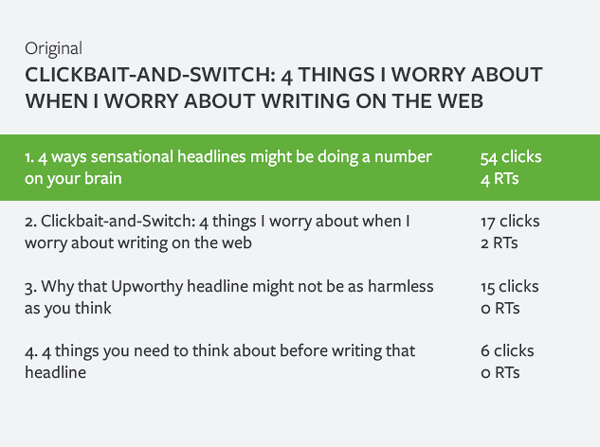
I want to inspire you to improve your headline writing.
So, I myself accepted the UpWorthy title challenge.
Here is my list of 25 titles for this post, which took me about 20 minutes to complete.
- How to write social media headlines to drive traffic effortlessly.
- Easy-to-implement tips for writing compelling titles for major social media platforms.
- Don't write your next social media headline without using these incredibly effective tips.
- Are you having trouble writing catchy titles for your social media? Then read this guide.
- The secrets to writing social media headlines that are worth clicking on and drive lots of traffic.
- The complete process for writing effective headlines for major social media platforms.
- Are your social media posts not getting any engagement? Don't lose that attention, use this guide to write great headlines.
- How to create compelling social media headlines: Headline Writing 101
- Creating social media headlines that grab attention and drive clicks, engagement, traffic, and conversions.
- Incredibly effective techniques for writing clickable headlines.
- Headline Writing 101: The Essential Elements for a Persuasive Headline
- Simple skills for writing headlines that you can use on your social media.
- The effective techniques you definitely need to know to write amazing headlines.
- Avoid getting zero engagement on your social media: Simple techniques you can use in your next update.
- The ultimate guide to writing irresistible headlines for major social media platforms.
- Don't post your next social media update without using these incredibly effective techniques for writing headlines.
- Writing persuasive social media headlines: Smart ways to drive lots of traffic to your website.
- Workshop on writing headlines: Killer techniques to beautify your posts.
- Super easy ways to write catchy headlines that get clicks.
- Writing attention-grabbing headlines that even your grandmother would click on.
- Write social media headlines that even David Ogilvy would be proud of.
- The art of writing attention-grabbing titles: How to get visitors to click on your links.
- The secrets to writing killer headlines on a daily basis.
- How to write persuasive social media headlines: The essential guide
- Advanced tips for writing headlines: Strategies to get more clicks and traffic from social media platforms.
Titles 5, 7, 8, 17, and 25 were the ones that stood out the most to me (besides the one chosen for the article).
Is there another title you consider better than the one chosen for this article?
Conclusion
18,144 updates are published every day on WordPress. Content that adds value is the minimum requirement to build a loyal audience and gain shares.
Titles are the most important element of your post, even on social media. They can increase conversions in 237% and improve your sales in $90,000 per year.
Therefore, write titles for different social media platforms using the proven strategies I shared in this post, and test your chosen ones using tools like... KingSumo title optimizer.
What type of headline works best for your social media audience? And what tools and templates do you use to write social media headlines?